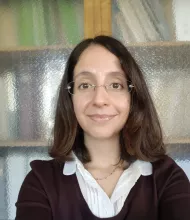
Michela Ravanelli, a tenure-track researcher at the Côte d’Azur Observatory, is an emerging leader in the international fields of geodesy and geophysics. Her research lies at the interface between solid Earth and atmospheric observations, focusing on the physical processes that link geodynamic phenomena with the response of the upper atmosphere and ionosphere. Her innovative, interdisciplinary approach and the scientific maturity she has already demonstrated make her an excellent candidate for Junior Membership of the Italian Academy of Engineering and Technology.
Since the early stages of her career, Dr. Ravanelli has made original contributions to the development of advanced methodologies for the integrated analysis of terrestrial and ionospheric GNSS data, opening new perspectives for the near-real-time monitoring of natural hazards. Her research has enabled the identification and characterization of ionospheric disturbances generated by earthquakes, tsunamis, and volcanic eruptions, providing important insights into lithosphere–atmosphere–ionosphere coupling. She has developed innovative GNSS-based methodologies and real-time processing strategies that significantly advance early warning capabilities for geohazards.
A distinctive aspect of her research is the integration of space geodesy with artificial intelligence. Her recent work demonstrates the effectiveness of machine learning and deep learning techniques for the automatic detection and characterization of ionospheric signatures associated with earthquakes and tsunamis. These data-driven approaches enable the analysis of large satellite datasets and support the development of advanced predictive systems, overcoming many of the limitations of traditional methods for investigating complex, nonlinear geophysical processes.
The quality and impact of her scientific contributions are reflected in collaborations with leading international research groups and her growing involvement in major scientific organizations, including the International Association of Geodesy (IAG), the International GNSS Service (IGS), the Global Geodetic Observing System (GGOS), and the European Geosciences Union (EGU). Her profile is further strengthened by international recognition and by a research trajectory characterized by scientific independence, interdisciplinary vision, and increasing leadership.
Overall, Michela Ravanelli has established herself as a highly promising researcher with strong theoretical and experimental expertise. Her work combines methodological rigor with scientific innovation, producing significant advances in geodesy and geophysics and contributing to the development of next-generation Earth observation infrastructures and strategies for geohazard monitoring, early warning, and risk mitigation.