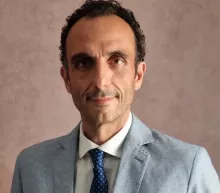
Salvatore Grimaldi is a Professor of Hydrology at the University of Tuscia and affiliated faculty at New York University. His scientific career spans over two decades of internationally recognized research in hydrology, water resources engineering, and environmental risk modeling. He is the author of more than 100 peer-reviewed publications and is consistently ranked among the world’s top 2% most cited scientists.
His scientific contributions combine rigorous theoretical development, methodological innovation, and technological implementation. His work has advanced stochastic hydrology, continuous hydrologic-hydraulic modeling, innovative environmental monitoring techniques, and open digital tools for hydroclimatic simulation. Through the development of experimental instrumentation, computer-vision-based monitoring systems, and decision-support platforms for ungauged basins, his research has translated fundamental scientific advances into operational technologies for flood risk reduction and climate resilience.
Professor Grimaldi has served in highly prestigious international leadership roles. He is currently President of the International Association of Hydrological Sciences (IAHS), a century-old global scientific organization representing more than 10,000 members worldwide — the first Italian scientist to hold this position. Previously, he served as President of the COST Association, the European intergovernmental framework supporting research networks across 41 countries. These appointments reflect both his scientific authority and his capacity to guide international research agendas.
At the national level, he has played key institutional roles, including President of the University Quality Board, member of the Academic Senate, and currently member of the Board of Administration of his University. He has coordinated major national and European research projects and has chaired international evaluation panels, contributing to the governance of scientific systems.
Over the years, his scientific trajectory has increasingly emphasized the responsibility of research toward society. This evolution has led to an integrated vision in which theoretical rigor, methodological advancement, and technological development converge to identify concrete solutions for societal challenges related to water security, flood risk mitigation, and environmental resilience. His work exemplifies how fundamental research can generate technological innovation and support evidence-based decision making.